Nokia FBBC
أخبار

Baseband Unit Modernization: Balancing Legacy Support and 5G‑Advanced Evolution for Ericsson RBS 6000 Series

Nov 03, 2026

Against the backdrop of exponential growth in mobile broadband and IoT‑driven data volume, telecom operators face a core challenge: how to leverage existing base‑station hardware assets while steadily migrating toward 5G‑Advanced capabilities. Baseband units stand as the digital heart of cellular sites, undertaking signal encoding‑decoding, resource scheduling, timing synchronization and fronthaul management for connected remote radio units. Within the widely‑deployed Ericsson RBS 6000 ecosystem, hardware such as Baseband 6630, Baseband 5212 delivers proven mixed‑mode processing for GSM, WCDMA, LTE‑FDD, LTE‑TDD and early‑phase 5G NR, helping operators achieve smooth multi‑generation network coexistence.
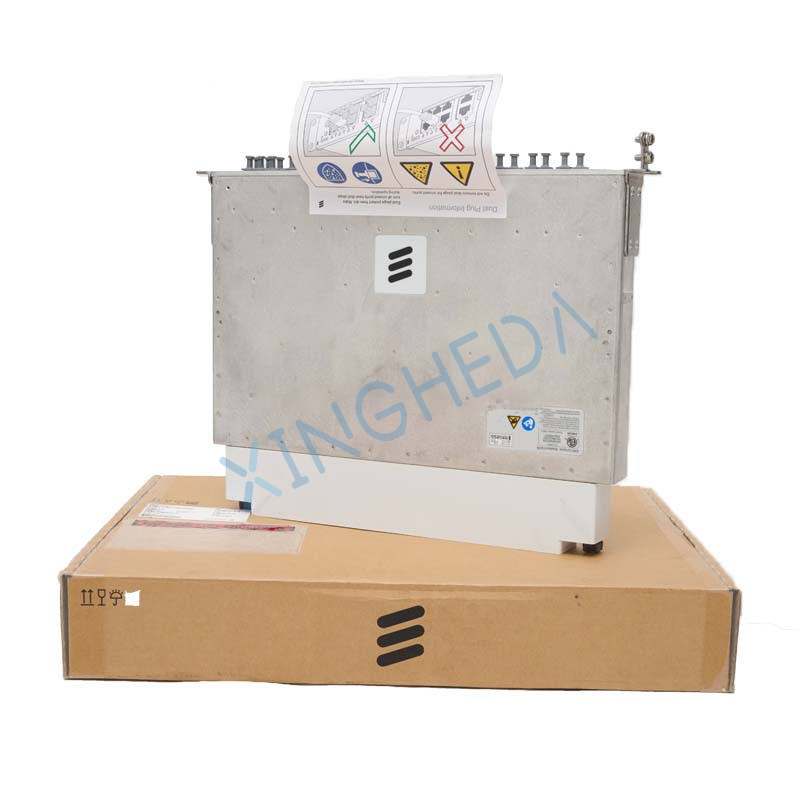
Understanding Ericsson RBS6000 Baseband Unit Architecture: Backbone of Hybrid‑Mode Cellular Networks

Ericsson baseband units are modular rack‑mount processing boards designed to pair with outdoor RRUs over CPRI or eCPRI optical fronthaul links. Unlike all‑in‑one integrated base stations, this distributed architecture separates digital baseband processing from RF radio hardware, allowing operators to upgrade baseband computing capacity independently without full replacement of site radio equipment.

Representative models within this product family include:

  1. Baseband 6630: High‑density processing unit supporting multi‑sector, multi‑band operation, compatible with 8T8R TDD radios such as Radio 8863 B40 (KRC 161 860/1). It supports DRAN and CRAN deployment modes, delivering rich CPRI port resources for large‑scale site expansion.
  2. Baseband 5212: Cost‑effective mid‑capacity baseband option, optimized for general‑purpose macro sites, supporting concurrent GSM, WCDMA and LTE services for medium‑sized traffic loads.
  3. Radio 8863 B40 (KRC 161 860/1): 8T8R Band40 2300MHz TDD remote radio unit, commonly mated with Baseband 6630 for urban TD‑LTE capacity enhancement.
  4. Radio 4428 B3B: FDD‑band RRU, frequently combined with above baseband boards to build hybrid FDD+TDD multi‑band macro cell sites.

This tightly‑integrated hardware ecosystem enables operators to retain existing tower, power and cabling infrastructure, reducing total capital expenditure during network upgrades.

Multi‑Sector Deployment Fields for Ericsson Baseband Hardware

Thanks to flexible multi‑standard processing capacity, these baseband boards are widely adopted across diverse vertical markets:

  1. Mobile Operator Macro Networks: Handle mixed 2G/3G/4G/5G traffic across urban cores, suburban areas and town‑level sites, supporting massive concurrent subscriber connections.
  2. Large‑Scale Venues & Campus Networks: Stadiums, industrial parks and university campuses demand high peak‑time throughput; baseband units coordinate Massive MIMO RRUs to ease network congestion during high‑density user gatherings.
  3. Smart City Infrastructure: Process real‑time data streams from traffic sensors, public monitoring terminals and city IoT nodes, offering low‑latency reliable wireless backhaul for smart‑city service roll‑out.
  4. Industrial Private Networks: For smart manufacturing workshops, these baseband boards support private LTE/5G networks, delivering stable low‑delay communication for automated production equipment.
  5. Rural Coverage Projects: Enable operators to reuse legacy hardware, expanding basic broadband service to low‑population regions without large‑scale new site construction.

Core Operational Benefits of Modern Ericsson Baseband Hardware

Field‑verified practical advantages drive global operators to select this baseband portfolio:

  • Multi‑standard co‑processing: Single hardware unit can run GSM, WCDMA, LTE and 5G NR, eliminating the need for separate dedicated boards for each mobile generation.
  • Measurable energy‑saving performance: Compared to older‑generation baseband hardware, updated units achieve roughly 20 % reduction in power draw under equivalent traffic load, matching operator carbon‑reduction and OPEX‑cutting targets.
  • High service scalability: By adding baseband boards or activating software feature licenses, operators can raise site throughput and sector quantity without site reconstruction. Field statistics show up to 40 % improvement in end‑user video streaming experience in congested zones.
  • Investment protection: Many hardware variants support feature expansion purely through software upgrades, extending usable service life of existing site assets.
  • Deployment flexibility: Supports both distributed DRAN and centralized CRAN architectures, adapting to different site conditions and transport‑resource constraints.

FAQ

Q1: What is the main difference between Baseband 6630 and Baseband 5212?

A1: Baseband 6630 belongs to the higher‑density new‑generation product, supporting more CPRI ports, more sectors and higher 8T8R TDD processing capability, suitable for high‑capacity urban macro sites. Baseband 5212 offers mid‑range capacity, more suitable for ordinary suburban and small‑town sites with moderate traffic volume.

Q2: Can Baseband 6630 work together with Radio 8863 B40 (KRC 161 860/1)?

A2: Yes. Baseband 6630 supports CPRI/eCPRI fronthaul connection with Radio 8863 B40. Operators need to confirm software release version and license activation to guarantee normal TD‑LTE Massive MIMO feature operation. Older baseband versions may lack sufficient processing resources for 8T8R TDD.

Q3: What deployment modes are supported by these RBS6000 baseband units?

A3: They support both DRAN (baseband placed locally at cell site) and CRAN (centralized baseband pool deployment), giving operators flexibility according to fiber‑transport resource conditions.

Q4: Are these baseband boards capable of energy‑saving function?

A4: Yes. Supported software releases include dynamic resource‑sleeping functions. Under low‑traffic periods, idle computing modules will be automatically shut down, cutting power consumption while maintaining normal service operation, and helping operators meet sustainability goals.

Q5: What points should be checked when selecting second‑hand or pre‑owned baseband hardware for network projects?

A5: Verify exact part number match, inspect hardware physical condition, confirm compatible software release versions, check for valid feature‑license information, and validate port functional testing reports before delivery. Incompatible hardware versions may trigger site commissioning failure.

منتجات جديدة
اشترك في النشرة الإخبارية
للبقاء على اطلاع على العروض الترويجية والخصومات والمبيعات والأخبار والمزيد.
يُقدِّم

ترك رسالة

ترك رسالة
إذا كانت لديك أسئلة أو اقتراحات، يرجى ترك رسالة لنا، وسوف نقوم بالرد عليك في أقرب وقت ممكن!

بيت

منتجات

whatsApp

contact